
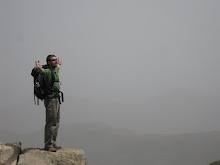

I am about to embark on a journey of a lifetime, a foray into the enigmatic region of Southeast Asia, a jaunt into the unexplored land of mystery and romance. As I sit here packing my backpack and making last minute preparations, it's hard to believe that tomorrow will set into motion a semester's worth of planning, and I'll soon be on my way to the aptly named Land of Smiles.
My plan is to spend the month of May working on a reef conservation project in Ao Nang, Thailand, and for the month of June I'm heading to Phnom Penh, Cambodia to teach a leadership class to university students. Then I'll spend most of July traveling through Vietnam and Laos, before heading back to the States on July 26. So tomorrow I'm hopping on a plane for the brutal Greensboro - Detroit - Tokyo - Bangkok - Krabi flight, due to put me in on Saturday morning.
Now for a little Thai history. Historians believe that the first Thai settlers ventured southwest from modern-day China and came under the rule of the legendary Angkor Empire. Sometime in the 13th and 14th centuries, a series of Thai kings were able to wrest control from the Angkor influence, and Thailand enjoyed 400 years and 34 reigns worth of peace. In 1765 the Burmese invaded and sacked the capital, which Thais later rebuilt as Bangkok, and after which the Chakri dynasty assumed power, beginning the line of kings still in power today. To ward off Western imperialism, kings in the Chakri line pursued progressive reform measures, and were later forced to forfeit significant land holdings in Laos and Cambodia. (It's worth adding that Thailand, meaning 'Land of the Free,' has never been colonized, with the exception of a brief Japanese occupation during WWII.)
A peaceful coup in 1932 marked the beginning of a constitutional monarchy and ushered in five decades of oppressive rule by anticommunist military dictators. Although one of Thailand's Prime Ministers attempted to shift the country to a representative democracy in the 1980s, the military ousted that government in 1991, giving rise to violent demonstrations and a shift back toward civilian rule. The nation implemented its sixteenth constitution (the first one ever penned without military oversight in Thai history) in 1997 which provided for significant democratic reforms. Thailand enjoyed tremendous economic growth throughout the early 1990s, but with the East Asian financial crisis in 1997, experienced a prolonged recession. The country has bounced back from the economic hardships of the 90s, largely due to the resilience of the Thai baht, and has weathered the current economic crisis relatively well.
Following what external observers called the cleanest elections in Thai history in 2001 and 2005, a military junta overthrew the government of Thaksin Shinawatra in 2006, and imposed martial law on the country. Democratic elections again made an appearance in 2007, and after dumping two corrupt leaders, Thailand settled in December 2008 (disconcertingly recent?) on current Prime Minister Abhisit Vejjajiva. Over the past few months, the exiled former PM Shinawatra has routinely stoked domestic discontent, prompting major riots and an official declaration of emergency in mid-April 2009. Although Vejjajiva has been somewhat effective in mitigating instability, the current political situation in Thailand can be summarized as tenuous at best. King Bhumibol Adulyadej has ruled since 1946, often exercising immense influence and intervening decisively in times of crisis, and continues to enjoy the protection of stringent lèse majesté laws.
Hopefully for my faithful readers, that will be the last time (at least for a while) that history major Matthew strikes, but I'm not making any promises. Thanks for reading, and I'll be sure and post when I arrive in Ao Nang, as soon as I have Internet and have recovered from jetlag.
My plan is to spend the month of May working on a reef conservation project in Ao Nang, Thailand, and for the month of June I'm heading to Phnom Penh, Cambodia to teach a leadership class to university students. Then I'll spend most of July traveling through Vietnam and Laos, before heading back to the States on July 26. So tomorrow I'm hopping on a plane for the brutal Greensboro - Detroit - Tokyo - Bangkok - Krabi flight, due to put me in on Saturday morning.
Now for a little Thai history. Historians believe that the first Thai settlers ventured southwest from modern-day China and came under the rule of the legendary Angkor Empire. Sometime in the 13th and 14th centuries, a series of Thai kings were able to wrest control from the Angkor influence, and Thailand enjoyed 400 years and 34 reigns worth of peace. In 1765 the Burmese invaded and sacked the capital, which Thais later rebuilt as Bangkok, and after which the Chakri dynasty assumed power, beginning the line of kings still in power today. To ward off Western imperialism, kings in the Chakri line pursued progressive reform measures, and were later forced to forfeit significant land holdings in Laos and Cambodia. (It's worth adding that Thailand, meaning 'Land of the Free,' has never been colonized, with the exception of a brief Japanese occupation during WWII.)
A peaceful coup in 1932 marked the beginning of a constitutional monarchy and ushered in five decades of oppressive rule by anticommunist military dictators. Although one of Thailand's Prime Ministers attempted to shift the country to a representative democracy in the 1980s, the military ousted that government in 1991, giving rise to violent demonstrations and a shift back toward civilian rule. The nation implemented its sixteenth constitution (the first one ever penned without military oversight in Thai history) in 1997 which provided for significant democratic reforms. Thailand enjoyed tremendous economic growth throughout the early 1990s, but with the East Asian financial crisis in 1997, experienced a prolonged recession. The country has bounced back from the economic hardships of the 90s, largely due to the resilience of the Thai baht, and has weathered the current economic crisis relatively well.
Following what external observers called the cleanest elections in Thai history in 2001 and 2005, a military junta overthrew the government of Thaksin Shinawatra in 2006, and imposed martial law on the country. Democratic elections again made an appearance in 2007, and after dumping two corrupt leaders, Thailand settled in December 2008 (disconcertingly recent?) on current Prime Minister Abhisit Vejjajiva. Over the past few months, the exiled former PM Shinawatra has routinely stoked domestic discontent, prompting major riots and an official declaration of emergency in mid-April 2009. Although Vejjajiva has been somewhat effective in mitigating instability, the current political situation in Thailand can be summarized as tenuous at best. King Bhumibol Adulyadej has ruled since 1946, often exercising immense influence and intervening decisively in times of crisis, and continues to enjoy the protection of stringent lèse majesté laws.
Hopefully for my faithful readers, that will be the last time (at least for a while) that history major Matthew strikes, but I'm not making any promises. Thanks for reading, and I'll be sure and post when I arrive in Ao Nang, as soon as I have Internet and have recovered from jetlag.

No comments:
Post a Comment
Note: Only a member of this blog may post a comment.